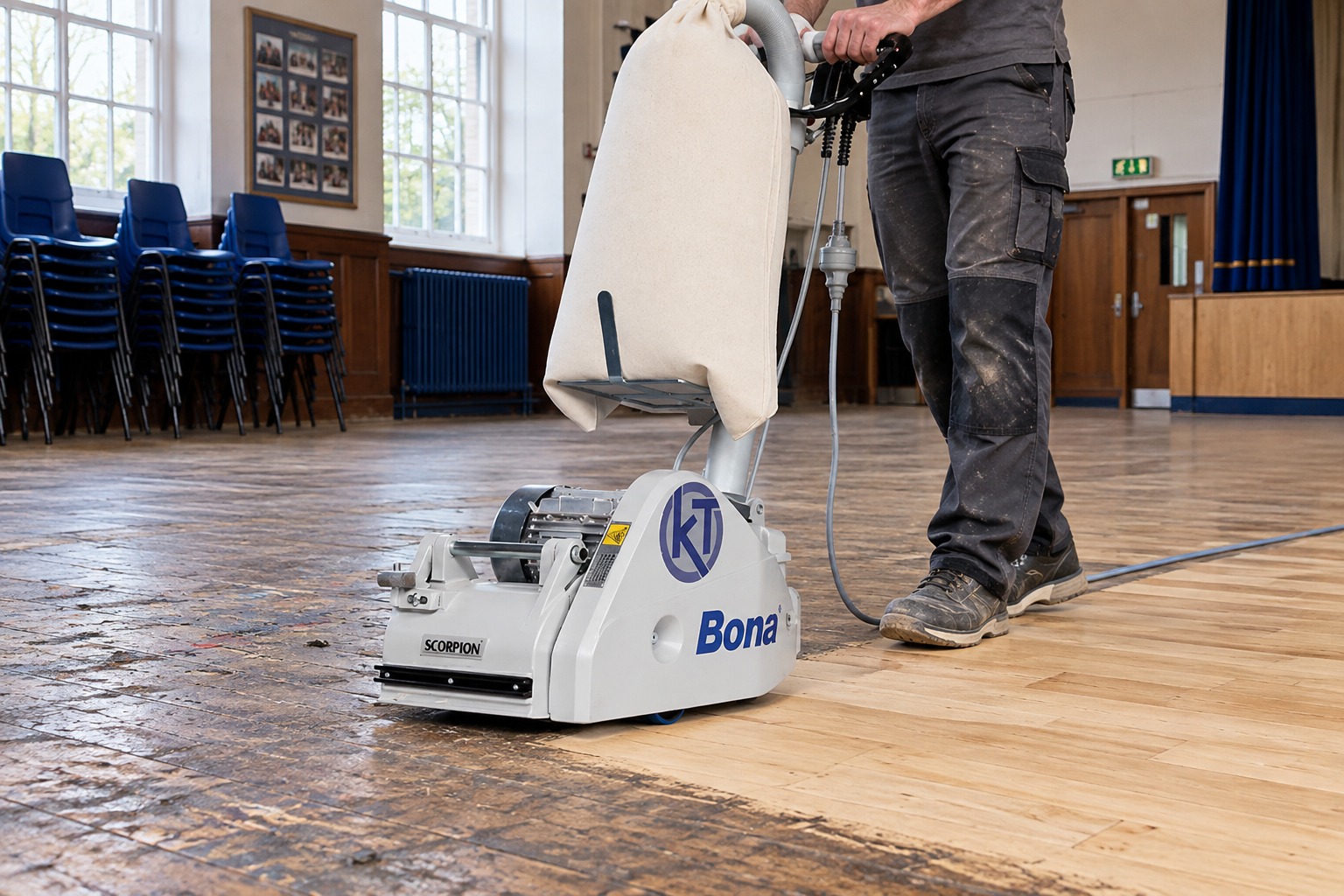
Overnight Commercial Floor Sanding in Southwark, SE1
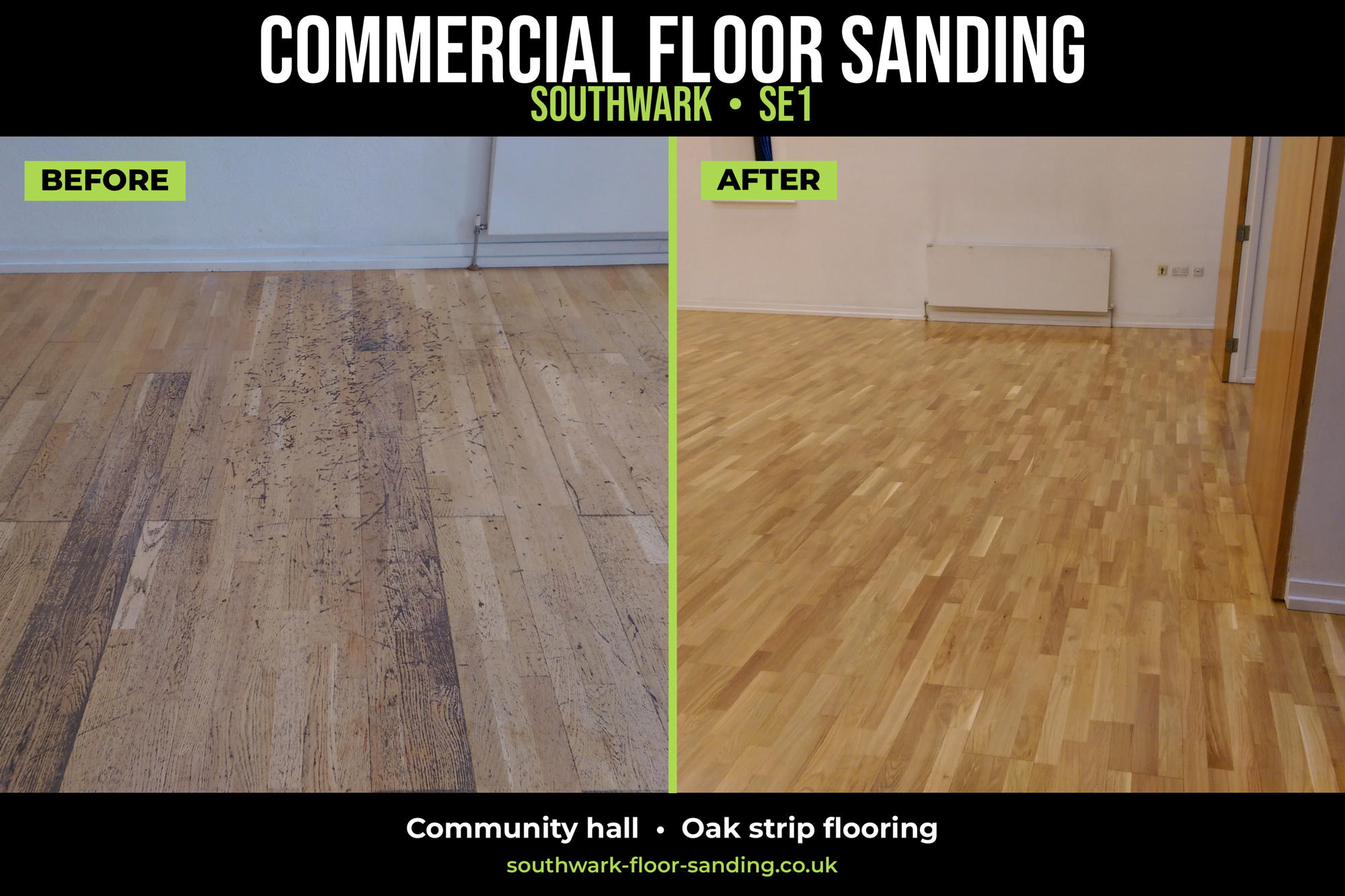
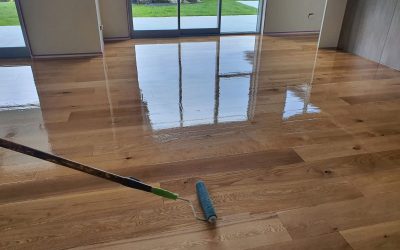
Overnight commercial floor sanding in Southwark, SE1 — oak strip flooring in a community hall, sanded and resealed after hours so the space can reopen the next day. Serving Borough, Bankside, London Bridge, Bermondsey and Blackfriars.
Commercial Timber Floors in Southwark Need More Than a Domestic Sand and Seal
A commercial floor cannot be treated like a spare bedroom. Before a sanding belt touches the timber, we need to know what is underneath it, how the building operates, which entrances must remain usable and when staff, customers or pupils need to return.
Southwark also has historic building stock around conservation areas including Borough High Street, Tooley Street, Thrale Street and Union Street. In older converted warehouses, churches, schools and public buildings, apparently simple floor defects can be connected with decades of board movement, historic heating alterations, previous patch repairs or moisture entering from below.
Typical commercial problems we deal with include:
- Worn traffic lanes: lacquer completely removed around entrances, serving counters, corridors and doorways.
- Open board gaps: dirt and cleaning residue becoming trapped between boards, particularly in old pitch pine flooring.
- Loose parquet: individual blocks moving because an old bituminous or brittle adhesive bed has failed.
- Moisture-related movement: cupping, lipping or localised distortion that must be investigated before sanding.
- Contaminated surfaces: polish, grease, wax, silicone or cleaning chemicals affecting adhesion of the new coating.
- Slip-risk concerns: unsuitable polish or an excessively smooth surface in entrances, halls and other pedestrian areas.
- Mixed timber repairs: modern replacement boards fitted into older quartersawn oak, pitch pine or teak flooring without proper matching.
- Previous aggressive sanding: floors already reduced in thickness by earlier contractors using unnecessarily coarse abrasives.
Applying another coat of shop-bought polish over these problems may improve appearance for a short period, but it does not correct failed adhesion, damaged timber or a coating system that has already broken down.
Our Commercial Floor Restoration Process
Step 1: Subfloor Audit & Moisture Testing
We start by inspecting the floor in its working environment. That means checking entrances, expansion points, heating locations, floor vents, thresholds, previous repairs and areas subjected to wet cleaning or repeated spillages.
Where moisture is suspected, hygrometer and moisture-meter readings are taken before extensive sanding begins. Sanding a damp or unstable timber floor flat can create another problem later because boards may move again as their moisture content changes.
On larger sites we also establish the working sequence at this stage. An office may need a clear access route for security staff, a restaurant may need its kitchen route kept operational, and a school may require separate zones completed between teaching periods.
Step 2: Timber Repairs, Re-Bonding & Resin Gap-Filling
Loose parquet blocks are lifted where necessary, the failed bed is cleaned back and suitable blocks are re-bonded. For many repair situations we use modern flexible silane-based parquet adhesives because they accommodate a degree of timber movement rather than creating an unnecessarily rigid bond.
Damaged boards are repaired or replaced with timber selected to suit the existing floor. We pay attention to species, grain and cut: straight-grain quartersawn oak should not be patched casually with an unrelated pale softwood, and mature pitch pine requires a different repair approach from modern pine boarding.
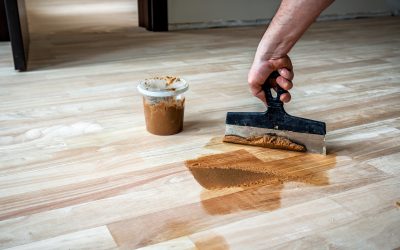
Fine, stable gaps can be filled using a resin slurry mixed with clean sanding dust from the floor, commonly produced around the intermediate sanding stages. Resin filling is not the answer to every gap; wide or actively moving joints are better dealt with using timber slivers or an appropriate flexible system rather than filling them with a rigid compound that will crack out.
Step 3: HEPA Dust-Controlled Sanding & Surface Preparation
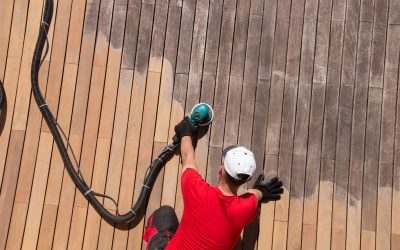
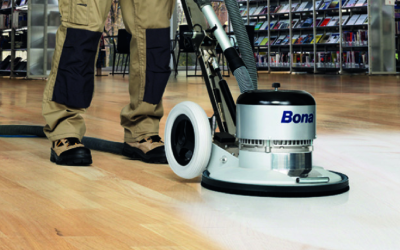
Our main commercial sanding work is carried out with professional belt machinery such as the Lägler Hummel connected to high-efficiency extraction. HEPA H14 filtration is used within the dust-control arrangement where specified for the project, helping control fine airborne contamination in occupied or sensitive buildings.
We normally work through a controlled abrasive sequence rather than trying to flatten the floor with one aggressive cut. Depending on the coating, floor condition and available timber thickness, that may progress from approximately 36 or 40 grit through 60 and 80 grit before the final 100-120 grit preparation.
Edges, corners, radiator positions, thresholds and areas inaccessible to the belt machine are prepared separately. The objective is to leave an evenly prepared surface without coarse sanding scratches, edge-machine dishes or obvious transitions between the main field and perimeter.
Wood dust is covered by COSHH requirements, so commercial sanding is planned with extraction, appropriate respiratory protection, housekeeping procedures and controlled waste handling. Site-specific RAMS can be supplied before work starts where required by the principal contractor, facilities manager or building operator.
Step 4: High-Traffic Finishes – 2K Lacquers, Hardwax Oils & Anti-Slip Systems
The finish is specified according to how the floor is actually used. A heavily trafficked reception or school hall generally needs a different coating strategy from an oak boardroom or heritage room where appearance and repairability may carry more weight.
For hard commercial use we frequently specify professional two-component waterborne polyurethane lacquers. Systems such as Bona Traffic HD or comparable commercial 2K products use a cross-linking catalyst to create a tougher cured film than a basic single-component domestic varnish.
Where the building brief places particular emphasis on indoor emissions, we can select products with recognised low-emission classifications such as EMICODE EC1 PLUS where the specified product holds that certification. The coating schedule still depends on compatibility, timber species, previous contamination and manufacturer requirements rather than selecting a product on an emissions badge alone.
Hardwax oils remain useful where a natural appearance and localised maintenance are priorities. Teak and other oily timbers require particular care because naturally occurring extractives can interfere with coating or adhesive performance, so specification and test areas matter.
For pedestrian slip resistance, current specifications should refer to BS EN 16165:2021 where testing is required. Older property and flooring documents may still refer to BS 7976-2 pendulum testing terminology, but BS 7976-2 has been superseded.
Step 5: Aftercare & Commercial Maintenance Protocols
A newly finished commercial floor should not be handed back without explaining how it is to be cleaned. Strong alkaline cleaners, excessive water, steam cleaning and indiscriminate polish can shorten the life of a coating surprisingly quickly.
We provide a maintenance schedule appropriate to the finish, including dry soil removal, compatible damp-cleaning products and periodic inspection of heavy traffic areas. Entrance matting matters as well: grit carried in from Borough High Street or a busy SE1 pavement works like abrasive paper beneath shoes and trolley wheels.
For heavily used buildings, planned maintenance is usually cheaper than repeatedly sanding back to bare timber. A correctly timed maintenance coat can renew sacrificial protection before traffic reaches the wood itself.
You can inspect examples of completed timber restoration work in our Southwark floor sanding gallery and review our floor sanding prices before arranging a site assessment.
Overnight and Out-of-Hours Floor Sanding in SE1
Overnight working is particularly useful around Southwark’s restaurants, offices, shops and public buildings where losing a normal trading day is not practical. The programme needs to account for more than sanding time: repairs, filling, coating intervals, ventilation and safe return-to-service all have to fit the available possession period.
We do not promise an unrealistic handover simply to fit a closing time. For many coating systems, the programme should allow roughly 12-24 hours before controlled light foot traffic and longer before furniture, wheeled equipment or intensive commercial use; the manufacturer’s current technical data sheet always takes precedence.
| Working Shift | Operational Benefit | Typical Facility Suitability |
|---|---|---|
| Overnight | Sanding and coating carried out after normal closing, reducing daytime disruption. | Restaurants, retail units, offices, reception areas and hospitality premises. |
| Weekend Phased | Longer uninterrupted curing window with fewer staff and visitors on site. | Schools, offices, churches, clinics, community halls and institutional buildings. |
| Sectional | Keeps part of a large building operational while individual zones are repaired and refinished. | Large halls, schools, corridors, multi-room offices and public facilities. |
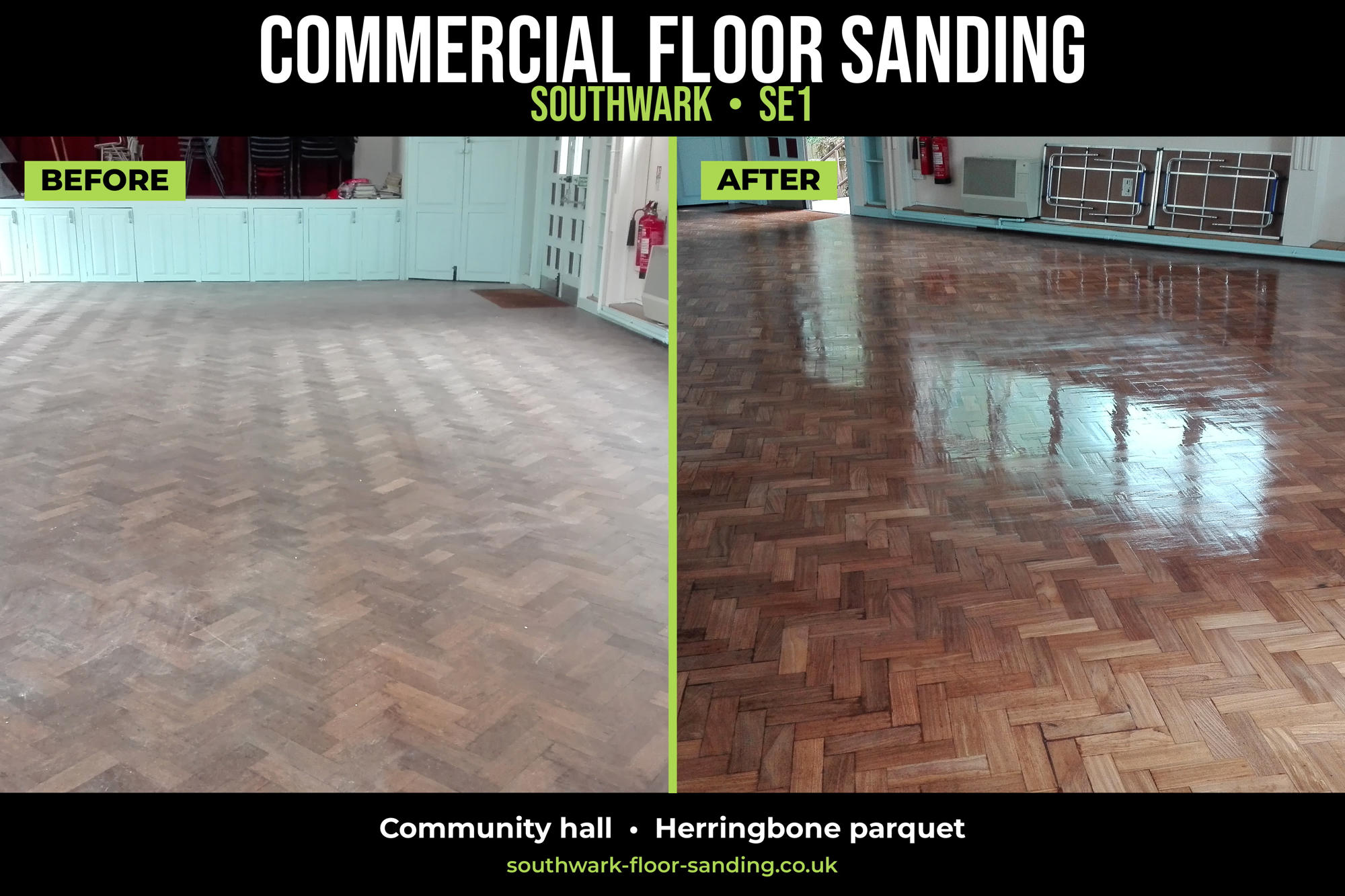
Overnight commercial floor sanding in Southwark, SE1 — herringbone parquet in a community hall, sanded and resealed after hours so the building can reopen the next day. Serving Borough, Bankside, London Bridge, Bermondsey and Blackfriars.
Working Safely in Occupied Commercial Buildings
Commercial floor restoration involves machinery, electrical leads, wood dust, coatings and temporary restrictions to pedestrian routes. Before mobilisation, the working area, fire routes, neighbouring occupancies and access arrangements need to be understood properly.
Site documentation can include RAMS, COSHH assessments for relevant products, machinery and extraction controls, PPE requirements and working-zone arrangements. Cables and extraction hoses are managed to reduce trip hazards, with barriers and signage used where other contractors or authorised building staff remain nearby.
For public-facing areas where slip resistance forms part of the brief, the finish should be selected against the required use and tested where the specification calls for it. A glossy appearance on its own says nothing reliable about measured slip performance.
Floor Types We Restore in Southwark
Southwark’s building stock gives us a broad mix of timber. Victorian and Edwardian premises may contain pine boards or traditional hardwood blocks, while converted industrial buildings around Bankside, London Bridge and Bermondsey can contain old strip flooring alongside later repairs and modern engineered sections.
- Quartersawn and plainsawn oak strip flooring
- Oak parquet and herringbone blocks
- Pitch pine floorboards
- Teak and other dense hardwood flooring
- Maple sports and assembly flooring
- Engineered timber, where the wear layer is suitable for sanding
- Reclaimed boards and sympathetic timber repairs
Species identification affects the choice of abrasive, filler, adhesive, stain and finish. It also matters when matching repairs; the wrong replacement timber may look acceptable while raw but become immediately obvious as soon as lacquer or oil is applied.
Commercial Sites We Work In
Our work is suitable for schools, restaurants, pubs, churches, offices, shops, galleries, community halls, studios, hospitality premises and other public or commercial properties across Southwark and SE1. Each sector has different access restrictions and different expectations for handover.
A restaurant may need work completed between the final service and the next trading period. A school may require DBS-aware site arrangements and holiday scheduling, while an office building may require noisy operations to stop before security or cleaning teams return.
Experienced Commercial Floor Sanding Contractors
Commercial work should be quoted from the floor that actually exists, not from a generic square-metre figure. Photographs and video are useful for the first assessment, but larger or technically uncertain jobs are followed by a physical site survey before the final scope is agreed.
Our commercial teams can include CSCS-carded operatives where site rules require them, backed by appropriate commercial liability insurance. Quotations set out the preparation, repairs, sanding process, finish specification and working assumptions so a facilities manager can see what is included before approving the work.
We also flag limitations before work starts. If a floor has inadequate remaining wear thickness, active moisture ingress, severe structural movement or contamination that could compromise adhesion, that needs addressing rather than hiding it beneath a new coating.

Arrange an Overnight Commercial Floor Survey in Southwark
If your timber floor in Southwark SE1 is worn, scratched, loose, difficult to clean or no longer suitable for heavy commercial traffic, send us photographs, a short video and approximate floor dimensions or plans.
We can establish the likely repair and sanding scope first, then arrange a site survey where required to confirm access, moisture conditions, working hours and finish specification.
Call 0800 335 7565 to discuss overnight or phased commercial floor sanding in Southwark. You can also send site photographs, videos and floor plans by WhatsApp or email for an initial assessment.